
Making Sugar While the Sun Shines. Photosynthesis and Energy.

The miraculous process of using sunlight to make sugar underpins all of life. I should say “all of life with which we are generally familiar”, for there are some bizarre examples of life in places where the sun don’t shine. But aside from these rare exceptions, life on Earth relies on photosynthesis turning inorganic molecules into organic ones. Trees and grasses, elephants and aphids - we all derive our energy from this transformation. The story of photosynthesis is mind boggling involving spinning turbines, animal balloon like cells, the engulfing of other creatures, and incomprehensible spans of space and time. What’s more, the uncovering of photosynthesis’ secrets transformed our understanding of the evolution of life and the development of multicellular creatures.
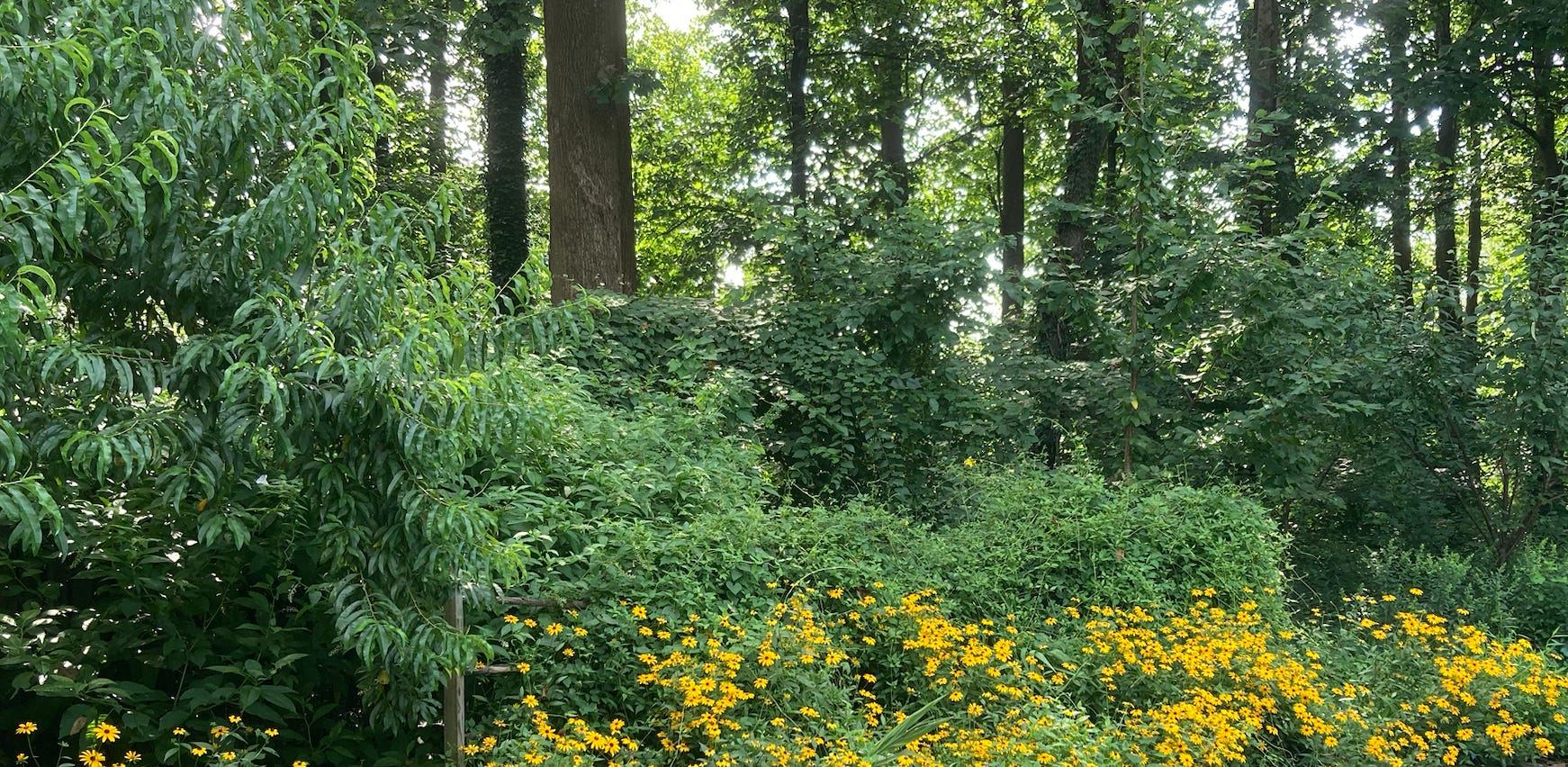
Humans rely on photosynthesis to provide us with food but also for oxygen and climate regulation, as well as countless products as far ranging as wood, oil, and medicine. Photosynthesis is a journey of transforming energy. The energy in solar photons is turned into energy in chemical bonds that eventually take the form of relatively stable packages of energy. These packets are sugars that move around plants to provide energy for cell repair, growth, and maintenance. We animals get energy by eating plants and other animals who eat plants. Much like financial flows, energy in the circle of life gets traded, invested, stored, used for work, and, in the right form, is easily transported. And just as monetary currency transformed society, the development of transportable sugars transformed the biosphere.
Let’s follow the energy exchange in photosynthesis that creates this transportable energy packet. Sunlight comes from a ball of gas some 150 million kilometers away, a distance that is nearly 4000 times the circumference of the earth. Sunlight is created by a couple of energy transformations within the Sun. First, the giant mass of the Sun causes a gravitational pull on all of the solar matter. The inward pull converts gravitational potential energy into thermal energy - i.e. the collected solar gas heats up. This is the similar to the transformation that a ball undergoes when it rolls down a hill - in which case the ball’s gravitational potential energy, at the top of the hill, is converted into kinetic energy of the rolling ball, at the bottom of the hill. In the sun, the mass is pulled inward and heated and the pressure inside the Sun rises. High temperature and pressure inside the sun push hydrogen atoms closer together leading to the fusion of hydrogen atoms into helium. A byproduct of this conversion is radiant energy, or sunlight. The sun emits 400,000,000,000,000,000,000,000,000 watts worth of light, continuously.
This description is a gross simplification of course - many other factors are involved: the sun rotates, mixes, and has a magnetic field to name a few complications. But in essence, the gas of the sun contracts due to gravity, temperatures and pressures rise, hydrogen fuses into helium, and “bang” - let there be light. So here we have the first energy transformations in our story: from gravitational potential to thermal to radiant energy.
The sun’s radiant energy, photons, zips across the 150 million kilometers between the the Sun and the Earth in about 8 minutes. But of course sunlight goes in every direction, not just toward Earth, leaving Earth to intersect roughly 1 in 10 billion photons that leave the sun. That is enough to result in each square meter of earth intersecting about 1370 Watts (or 13.7 one hundred watt light bulbs), averaged over day and night and across the globe. Interestingly, just one square meter (about a square yard) of this average amount of incident solar energy is nearly the same as the electrical energy used by the average US household! It’s worth an aside here to note that there are, of course, vast opportunities for harnessing sunlight to power our society in a low carbon way. Most of the world is embracing solar energy technologies at a mind boggling pace, even as the current US administration is shutting down solar and wind developments. For me, this theft of a stable future is among the most egregious of crimes.
“OM. Peace and Love.” Lets get back to hope and joy by marveling about photosynthesis. Long before we thought to harness sunlight to power our devices, photosynthetic organisms evolved and have been so successful that today they intersect about 60% of the sunlight incident on Earth. But all of this intersected sunlight does not power photosynthesis. Firstly, photosynthetic organisms can’t utilize all the wavelengths of incoming sunlight. Sunlight is made up of the familiar visible light wavelengths, from red to green to violet, but it is also composed of X-rays, ultraviolet rays, infrared rays, microwaves, and radio waves. Land plants primarily use visible light to photosynthesize, with the exception of green wavelengths which are reflected off the leaf making the leaves appear green to us. This exclusion of wavelengths means leaves could absorb 45% of the incident light’s energy. However, other factors, like further reflections within the leaf and less than optimal growing conditions, reduce the amount of incident light that is actually used in photosynthesis to around 5% of the incident sunlight. Of the sunlight that is absorbed, 4/5 of that light is used for maintenance by the plants, such that just 1% of incident sunlight ends up being used to create new plant material. This is still around eight times the total power consumption of human society, not including the energy we eat.
Lets delve into how photosynthesis works. Essentially, photosynthesis is the process by which the energy from sunlight is harnessed to rearrange carbon dioxide (CO2) and water (H2O) to create a carbohydrate (C6H12O6) and molecular oxygen(O2). The equation for the transformation looks like this
6CO2 + 6H2O + light energy >>> C6H12O6 + 6O2.
The consumed carbon dioxide and the released oxygen gas have massive impacts of the global cycles of these two elements. They are both key components for life as we know it - creating and cleaning the air we breathe, and making life on earth possible for creatures like us through carbon sequestration - the surface of the earth used to be MUCH hotter. But I won’t dwell on these global cycles here. Instead, we’ll zoom in closer and closer to the location of photosynthesis, starting with the structure of leaves, to the cells that make up those leaves, to the organelles inside those cells, and all the way down to the proton pumps that move protons in and out of those organelles and thus power life.
Land plants, with the exceptions of mosses and liverworts, have leaf structures like the layers of a sandwich. The layers of the leaf are not many: an upper and lower epidermis (the bread), the palisade and the spongy mesophyll (two fillings) and vascular bundles (strings of cheese). This website has great photos and descriptions of the interior of leaves.
The upper and the lower epidermis, or skin layers, are usually covered in a thin waxy cuticle. Together, the epidermis and the cuticle reduce water loss and prevent pathogens from getting into the leaf. The epidermis is typically just one cell thick though in very hot or cold conditions can be several cells thick.
The two mesophyll layers derive their names from their location and structure. “Mesophyll” is derived from the Latin words meso, which means middle, and phyllon, which means, somewhat confusingly, leaf - perhaps better understood as “layer” here. So, the mesophyll is the middle layer of the leaf. The palisade mesophyll is arranged like its name sake: a palisade is a fence made up of wooden planks or logs standing vertically in a line. In the case of the palisade mesophyll the “planks” are columnar shaped cells that are arrayed in a grid rather than a line - resembling a case of beer more than a wooden fence. This palisade layer sits just below the upper epidermis. In turn, the mesophyll cells are packed with chlorophyll - where photosynthesis takes place. The tight packing of palisade mesophyll cells up against the sunlight upper epidermis maximizes photosynthesis. Below the palisade level is the spongy mesophyll, which is bounded on the lower side by the lower epidermis. This spongy layer is less densely packed than the palisade mesophyll. This open space allows for the movement of gases into, out of, and around the inside of the leaf.
Within the mesophyll and running like pipework through the horizontal plane of the leaf (parallel to the leaf’s surface) are the vascular bundles. We see the vascular bundles on the leaf surface as the veins of a leaf. And much like the arteries and veins of our vascular system, the vascular bundles of plants transport essential liquids and nutrients around the plant. Water is drawn up from the roots of the plant to the far reaches of the plant’s leaves, and photosynthetically derived sugars flow from the leaves to the other parts of the plant through the vascular bundles. The vascular bundles also provide some structural support - especially in the non-woody parts of plants like leaves.
If this was the entirety of leaf structure, we would not have photosynthesis. For any carbon dioxide inside the leaf would be quickly converted into a carbohydrate and there would be no carbon left with which to further photosynthesis. But leaves have openings, called stoma, that allow carbon dioxide from the atmosphere into the leaf’s interior and oxygen to flow in the opposite direction. For land plants, where water is often limiting, the stomata (plural of stoma) occur on the lower epidermis where it is slightly cooler and less exposed to wind, meaning there will be less loss of water to the atmosphere. The location of the stomata also dictates that the spongy mesophyll is best situated on the lower decks so carbon and oxygen can enter the leaf and move around the open spaces in the spongy layer.
The stomata also conserve the plant’s water supply by closing at certain times. For instance, most stomata close at night since photosynthesis doesn’t operate in the dark. Furthermore, stomata will close in hot and dry conditions to preserve water. The stomata are open or closed depending on the amount of liquid in the two specialized cells that border a given stoma - the so called guard cells. Each guard cell is similar to the long balloons used by entertainers to make balloon animals. The two guard cells are connected to one another at both ends. When the guard cells are full of water, they become rigid and pull away from one another creating an “O” shape that has an opening in the center - allowing the gasses to flow in and out. But when water is limiting, the guard cells become limp and collapse together to close the stomata. How clever.
On a personal note, understanding the role of water in opening stomata was the first time I understood how physics drove a biological process. The excitement of this revelation remains so vivid that I take every opportunity of sharing the explanation with others - no doubt to the boredom of my family. It wasn’t until recently, while reading Life’s Edge, that I realized my excitement was because this opening process links the inorganic world with the living one. Indeed, linking inorganic and organic processes is at the heart of understanding both the origin of life and evolution. This is also what photosynthesis does.
It is inside the cells in the mesophyll, primarily, that photosynthesis takes place. You may recall that cells have various organelles inside of them, each of which have specific functions. For example the nucleus houses DNA and regulates growth and metabolism, and vacuoles store nutrients and waste produces. Cells in both the spongy and the palisade mesophyll have a specialized plant organelle - the chloroplast - where photosynthesis occurs. Any give plant cell may have upwards of 100 chloroplasts within. Every square millimeter of a leaf may contain as many as half a million chloroplasts.
Chloroplasts (organelles, inside a cell, inside the mesophyll layer, inside a leaf) have a double membrane that separates them from the rest of the cell. This unusual double layer, along with other lines of reasoning, has led biologists to conclude that chloroplasts were once separate organisms, probably cyanobacteria, that were engulfed by a sub group of protists that needed to eat to survive. Indeed, this discovery dramatically transformed our understanding of evolution. Protists are (mostly) single celled creatures that are neither plant, nor animal, nor fungi, nor bacteria that predate plants and animals. Plants and animals may actually share a common ancesteral protist.
About 1.5 billion years ago, some protists evolved by absorbing cyanobacteria, or something very similar to it. Cyanobacteria create their own energy out of sunlight, via photosynthesis, and don’t need to eat others to survive. Protists “thought” this self-production of food was a good idea. So, some of the ancient protists engulfed cyanobacteria and instead of digesting it, retained it such that the engulfed cyanobacateria continued to photosynthesize within the new symbiotic being. This likely led to the evolution of algae and eventually plants. Just as a note of curiosity, cyanobacteria still live freely today and were around for billions of years before the protists came along.
It is interesting to note that the engulfed cyanobacteria benefited from this relationship as well. Inside the protist cell, the cyanobacteria was protected from oxygen build up and had easy access to proteins and, as algae and plants evolved, ready access to sunlight. Such a mutualistic relationship between once separate beings is not as unusual as you may think - humans have approximately the same number of non-human cells in our bodies as human cells. When one of the two beings is inside the other, it is called endosymbiosis. Mitocondria and nitroplasts, in addition to chloroplasts, are other examples of endosymbiosis.
Let’s go deeper - inside the chloroplast. There are the two membranes that form the outer layer of the chloroplast but inside the chloroplast is a third membrane. This inner membrane is highly folded and is called the thylakoid. Thylakoids are folded over themselves so many times, they looks like stacks of coins and they fill up most of the space inside the chloroplast. The thylakoids are crammed full of pigments that absorb light. One of the pigments is chlorophyll which absorbs visible light - except for green.
We’ve finally zoomed in to site of action andwe can get back to the energy transaction story. When sunlight strikes a chlorophyll molecule inside the chloroplast the photon is often absorbed, ejecting an electron from the molecule. This ejected electron has more energy in its unbound state than when it was bound to the chlorophyll molecule. Radiant energy has been converted to chemical potential energy.
The ejected electron then goes through a series of binding-and-unbinding to different molecules in a so called electron transport chain. This chain can be visualized as the electron rolling down a hill in steps - imparting energy to the environment as it “falls down” each step. Each incremental step imparts enough energy to catalyze a chemical reaction - the details of which we’ll happily set aside. But importantly for this story, this stepping down the electron transport chain also results in protons being forced inside of the thylakoid - that stack of coins membrane inside the chloroplasts. This creates a excess of protons inside the thylakoid resultis an electrical potential difference and a proton concentration difference across the thylakoid membrane. These gradients are a form of energy - electrochemical energy this time. We are all very familiar with electrochemical energy - that’s what a battery stores.
The little battery across the thylakoid membrane drives a flow of protons across the thylakoid membrane and into the inter-thylakoid space inside the chloroplast. This flow of protons quite literally spins a protein, much like a turbine, creating mechanical energy. And remember, there are half a million of these chloroplasts in every square millimeter of a leaf. So within each of these square millimeters there will be a dazzling number of spinning protein turbines for every square millimeter of leaf. That’s trippy. It gets wierder.
The mechanical energy of the spinning turbines is used to synthesize ATP - the transportable energy workhorse of all metabolic and catabolic processes in plants and animals. ATP powers things like muscle contraction, nerve impulses, digestion, and chemical synthesis. ATP is the be-all-end-all of the processes that keep us alive. ATP stands for adenosine triphosphate, where the adenine is the nitrogen base of the molecule and triphosphate refers to the fact that 3 phosphorus atoms are attached to the molecule in a tail like structure. When these phosphorus atoms are removed from ATP, you guessed it, energy is released.
ATP is found in every known form of life. It is estimated that we process around 45 kilograms (100 pounds) of ATP every day for normal cellular growth. Each cell makes and consumes about 10 million molecules of ATP every second. Notably, we only have about one quarter of a kilogram of ATP in our bodies at any one time - but it is continually broken apart and reformed. Which means I’ve processed more than 2 million pounds of ATP in my lifetime.
The above steps from sunlight to ATP production, and many other reactions I’ve glossed over, are known as the light dependent reactions of photosynthesis. The name suggests that there are also dark reactions. Dark reactions, which unsurprisingly occur in the dark, use ATP to eventually create glucose, sucrose, starches and cellulose.
Fascinatingly - a balance of light and dark conditions has been found to maximize the energy production and growth in plants. This suggests that the day / night cycle on earth is just right for life to have evolved. Of course, this is “life that we are familiar with.” There is also life, here on Earth, that is not so familiar to us but which also synthesizes ATP.
Chemolithotrophs, like photosynthesizers, create ATP through an electron transport chain, but they get their electrons from compounds that don’t require sunlight to liberate them. For instance, at hydrothermal vents on the ocean floor, hydrogen sulfide (H2S) readily combines with oxygen gas to create SO2 and two free electrons. These free electrons are sent down a similar path to photosynthetic electrons and result in the creation of ATP. Chemolithotrops were probably one of the first forms of life on our planet. We know they created microbial mats on the floor of the ancient oceans long before photosynthetic life emerged.
In closing, let’s review the two paths that are woven through this story: one of spatial scale, and one of energy. We started with an object 93 million miles away that sent photons to earth. Then we explored the layers of a leaf, one of which was the mesophyll. The mesophyll is connected to the outside word via wondrous balloon like stomata. The mesophyll is made up of cells inside of which are many organelles. One these organelles, the chloroplast, was once a separate being - cyanobacteria - which were engulfed by a single cellular creature. The engulfer and engulfee then evolved together into a mutually beneficial chloroplast. Inside the chloroplasts are folded membranes similar to a stack of coins. These membranes contain loads of the molecule chlorophyll - which are about 30 Å across - which is where photosynthesis is driven by sunlight. That’s a big spread of sizes from 150,000,000,000 meters to the sun to 0.000000003 meters across a chlorophyll atom - a 10^21 difference in scale.
The energy journey starts with gravitational energy of the solar mass, converted to thermal energy, and creating radiative energy that travels to earth as photons. The photons hit chlorophyll molecules and liberate an electron creating chemical potential energy. This chemical potential energy of a given liberated electron is used to create molecules (which we didn’t go into) and to create electrochemical energy, much like a battery. Protons flow across the gradients of the electrochemical battery and spin a protein much like a turbine - this is mechanical energy. This mechanical energy (plus all the chemistry we skipped) go into creating ATP - a molecule that has chemical energy. ATP is transportable and readily available to power the metabolism of the Earth’s biosphere.
Energy transformations enabling life spans gravitation potential, thermal, radiant, chemical potential, electro-chemical, and mechanical energies. All this happens on wildly different spatial scales, and at unfathomable rates. It hardly seems tenable. Perhaps the next time any of us look upon a humble blade, we will think of the millions upon millions of spinning proteins and marvel at the vast complexity of life.
What a lovely essay on such an important and interesting part of life.
wow Pru, Thanks for breaking this down. To be honest I need to read this a few more times before I can grasp all the concepts.
But, I did come away with marveling at the magic of the universe.